Truthear Gate Review: The Best Budget IEM Under $20?
Can a $20 pair of earphones really impress a picky listener? The Truthear Gate says yes, and it says it loudly. This tiny IEM replaced the much loved Truthear Hola, and the audio community has a lot to say about it.
In this Truthear Gate review, we cover everything. You will learn about the sound, the build, the cable, the comfort, and the value. By the end, you will know if the Gate belongs in your ears or in your cart.
In a Nutshell
- Price and Value: The Truthear Gate costs around $17 to $20. It gives you one of the best total packages in the budget IEM market, with a great cable and a nice set of ear tips.
- Sound Signature: The Gate has a light V shaped tuning with tight bass, forward upper mids, and lively treble. It sounds energetic, clear, and fun, though some listeners find it a bit lean.
- Build and Design: It has a clear faceplate and a lightweight resin shell. Many people call it the best looking IEM at this price, but the plastic feels light and can scratch.
- The Cable: The stock cable is soft, light, and tangle resistant. Reviewers often say it is the best cable you can get at this price.
- Easy to Drive: With 28 ohms impedance and 122 dB/Vrms sensitivity, the Gate plays loud from phones, laptops, and cheap dongles. You do not need an amp.
- Best For: Beginners, gamers, students, and anyone who wants a cheap but serious first IEM with lots of detail and punch.
Truthear Gate: Quick Overview

- Adopting N52 magnet double-cavity internal magnetic circuit dynamic driver, with a brand-new carbon LCP...
- GATE is designed as a cost-effective and comfortable IEM. Its appearance has been redesigned, the weight...
Last update on 2026-11-21 / Affiliate links / Images from Amazon Product Advertising API
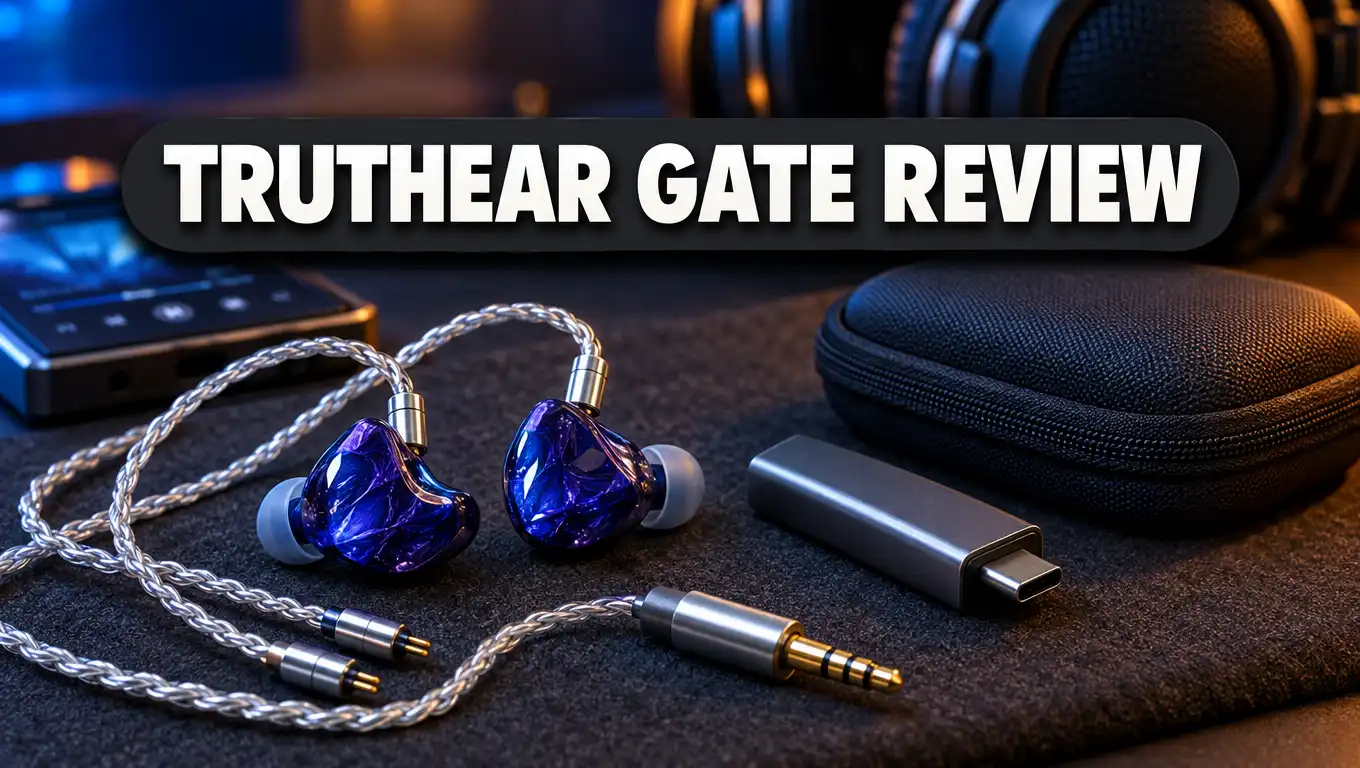
The Truthear Gate is a single dynamic driver in ear monitor. It uses a 10mm dynamic driver inside a small resin shell. Truthear released it as the successor to the Hola, which many people loved.
Hola fans wondered why Truthear dropped such a popular model. The answer is the Gate. It keeps the strong points of the Hola and fixes the common complaints about a dull and muffled sound.
Here are the key specs you should know:
- Driver: 10mm dynamic driver
- Impedance: 28Ω ±15% at 1kHz
- Sensitivity: 122 dB/Vrms at 1kHz
- Frequency Response: 10Hz to 45kHz
- Connector: 0.78mm two pin detachable cable
- Plug: 3.5mm, with or without a mic
The Gate comes in two versions. One has an inline microphone for calls and gaming. The other has no mic for a cleaner look.
The price is the big story here. For around the price of a pizza, you get a real hobby grade IEM. It competes with the Moondrop Chu II, the 7Hz Zero:2, and the Tangzu Wan’er S.G II.
Most reviewers agree on one thing. The Gate is a safe pick for anyone shopping in the budget range. It may not suit every ear, but it gives great value for very little money.
Unboxing and Accessories
The Gate box is simple. You do not get fancy packaging at this price. But once you dig inside, you find a surprisingly good accessory set.
Here is what comes in the box:
- The Truthear Gate earphones
- A detachable 0.78mm two pin cable
- Two types of silicone ear tips in several sizes
- A small carry pouch
- User manual and paperwork
The ear tips deserve a quick note. You get one set with a long, narrow bore and one set with a short, wide bore. These tips change the sound a little. The wide bore tips give a smoother upper midrange and treble for many listeners.
Now let us talk about the cable, the star of the show. The Gate cable is soft, pliable, and lightweight. It has a thick sheath that feels solid, yet it has very little memory. It does not tangle easily, which makes daily use a joy.
Many reviewers rank it as the best stock cable under $200. Some people even joke that you buy the cable and get a free IEM with it. That says a lot about its quality.
The included pouch is also nice. Long term users praise it as a handy and well sized case for daily carry. It protects the earphones in your bag or pocket.
At this price, most brands give you a thin cable and basic tips. Truthear goes further. The Gate accessory set gives you real value on day one, and you do not need to buy upgrades right away.
Design, Build, and Comfort
The Gate looks great. It has a clear faceplate that shows the simple internals inside. White text sits on top of the shell, and the overall look is clean, modern, and stylish.
The white version gets the most love. Many people say they would happily wear it outside as a fashion accessory. That is rare for any IEM, even expensive ones.
The build quality matches the price, though. The resin shell feels light and a bit cheap in the hand. It feels lighter than the old Hola. Some long term owners say the shell scratches easily, so you should store it in the pouch.
A few users also report minor driver flex. This means you hear a small crinkle sound when you push the earphones into your ears. It is common in budget IEMs and does not affect sound quality.
Comfort is good for most people. Long term users report wearing the Gate for six to seven hours with no problems. The light weight and the soft cable help a lot here.
Still, the fit is not perfect for everyone. The nozzle is on the wider side. The back corner of the shell may rub the antihelix in smaller ears. Some listeners feel slight discomfort after an hour or two.
Our advice is simple. Try all the included tip sizes first. A good seal improves both comfort and bass response. If the stock tips do not work, third party tips can solve most fit issues.
Top 3 Alternative for Truthear Gate
The Gate is a great IEM, but it is not the only choice. Here are three strong rivals in the same price range. Each one offers a slightly different sound and feel.
Moondrop Chu II

- Aluminum-Magnesium Alloy Dome Composite Diaphragm As a dome diaphragm material, AI-Mg alloy exhibits high...
- Alloy Casting Cavity Ensuring Durability and High-Quality Texture The acoustic cavity of the“CHU...
Last update on 2026-11-21 / Affiliate links / Images from Amazon Product Advertising API
The Moondrop Chu II is a favorite budget IEM with a metal alloy shell. It feels sturdier than the Gate. Its small, bullet style design fits small ears very well.
The Chu II has a balanced tuning with a bit more warmth than the Gate. It suits listeners who want a smooth and easy sound. Some versions come with a mic and a detachable cable.
7Hz x Crinacle Zero:2

Last update on 2026-11-21 / Affiliate links / Images from Amazon Product Advertising API
The 7Hz Zero:2 is a tuned collaboration with Crinacle, a famous IEM reviewer. It uses a 10mm dynamic driver, just like the Gate. It offers more bass and a warmer midrange.
If the Gate sounds too lean for you, the Zero:2 is a great fix. It is also a popular pick for gaming. It comes with a good OFC cable and a mic option.
Tangzu Wan’er S.G II

- 10mm PET Diaphragm Dynamic Driver with Upgraded Driver Chamber: Building on the success of the Wan'er 1st...
- 0.78mm FLAT 2-Pin Connector: The TANGZU Wan'er S.G 2 in ear monitors features a standard 0.78mm...
Last update on 2026-11-21 / Affiliate links / Images from Amazon Product Advertising API
The Tangzu Wan’er S.G II is another 10mm single dynamic IEM with a PET diaphragm. It has a lightweight shell and a fun, lively tuning. Many gamers like it for clear footstep sounds.
The Wan’er S.G II has a tangle free cable and a mic version. It is a strong pick if you want a cheap IEM with personality. It often costs about the same as the Gate.
Sound Signature Overview
The Gate has a light V shaped sound signature. It follows a Harman style tuning with tight bass, lifted upper mids, and bright treble. The result is energetic, detailed, and lively.
Many listeners call it the most fun option among ultra cheap single dynamic IEMs. It delivers punchy bass guitars and snappy kick drums. It makes music feel exciting and engaging.
However, the tuning is not for everyone. The stock tone leans lean and a bit shouty. A bump around 1 to 2 kHz pushes vocals forward. Some ears hear this as extra clarity. Other ears hear it as nasal or honky.
The tip choice matters here. The wide bore tips help tame the upper mids and treble for many users. The narrow bore tips add a bit more bass and warmth. Try both before you judge the sound.
The Gate also responds well to EQ. A small boost in the low bass and lower mids adds warmth. One popular setting uses a +2 dB low shelf near 65 Hz and a +2 dB peak near 475 Hz. This makes the Gate fuller and more natural.
Think of the Gate as a bright, clean canvas. Out of the box, it gives clarity and energy. With a little tuning, it can become a smooth daily driver. That flexibility adds to its value.
Bass Performance
The bass is one of the best parts of the Gate. The balance between sub bass, mid bass, and upper bass is excellent for the price. Extension goes deep, and nothing feels missing.
The bass is tight and clean. It never bleeds into the midrange. You get no mud, no haze, and no cloudiness. Every note sounds clear and controlled.
Kick drums sound snappy and urgent. They still keep some weight and roundness. Plucked bass guitars sound textured and precise, with enough thickness to drive the song forward.
Interestingly, many reviewers say the bass sounds bigger than it measures. The forward upper mids may help here. They bring out the attack of bass notes, which makes them feel more present.
That said, the Gate is not a bass monster. It sits on the lighter and tighter side compared to the 7Hz Zero:2 or the old Hola. Bassheads may want more rumble and slam.
If you love big bass, you have two easy fixes. First, get a deep seal with the right tip size. Second, add a small bass shelf with EQ. The driver handles extra bass well without distortion.
For most genres, the Gate bass works great. Rock, pop, jazz, and electronic music all sound punchy and fun. It is a quality first bass, not a quantity first bass.
Midrange and Vocals
The midrange is where opinions split the most. The Gate has forward upper mids with a lift in the 1 to 2 kHz area. This region shapes how vocals, guitars, and pianos sound.
Some listeners love it. They hear extra clarity, energy, and liveliness. Vocals jump out of the mix. Details in the recording become easy to hear.
Other listeners find it too much. They describe vocals as nasal, clenched, or shouty. Electric guitars can sound too close and a bit harsh. Warm sound lovers may not enjoy this tuning.
There is good news, though. The main ear gain peak sits around 2.9 kHz, which sounds natural to many ears. The upper midrange above 2 kHz avoids that papery harshness found in many budget IEMs.
Female vocals sound bright and clear on the Gate. Male vocals sound clean but a little thin. Acoustic guitars have nice bite and texture. Pianos sound crisp, though they lack some body.
If the mids bother you, try the wide bore tips first. Then add a gentle boost near 475 Hz with EQ. This adds warmth and body to voices and instruments.
Overall, the Gate midrange is clear and detailed. It favors clarity over warmth. If you like an open and energetic vocal sound, you will enjoy it. If you prefer lush and smooth mids, consider the Chu II or Zero:2 instead.
Treble Performance
The Gate treble is lively and well extended. It follows a Harman style curve with elevated lower treble between 3 and 8 kHz. This adds sparkle and detail to cymbals, strings, and synths.
Some reviewers rank it as one of the best treble tunings in a single dynamic IEM at this price. The usual 7 to 8 kHz peak sounds smoother on the Gate than on many rivals. Even some pricier Truthear models struggle here.
The upper treble also gets praise. The common air peak near 13 to 14 kHz sits a bit higher in frequency on the Gate. This reduces sibilance and harshness while keeping a sense of air.
One sound engineer on a community forum said the treble was simply amazing. Synths, snares, strings, and choirs sounded unreal to him. That is high praise for a $20 IEM.
Not everyone agrees, though. Some reviewers say the treble can sound dry and a bit scratchy. Snare drums and vocals may carry a slight chalky or gritty texture. Treble sensitive listeners may feel some fatigue in long sessions.
Volume matters a lot here. At low to moderate levels, the treble sounds crisp and clean. At high volume, it can get sharp. Keep the volume reasonable for the best experience.
If the treble feels too hot, try a small cut between 4 and 7 kHz. You can also try foam tips, which soften the highs. With these tweaks, the Gate becomes a smooth and detailed listen.
Soundstage, Imaging, and Detail
Soundstage is not a strong point for the Gate. The forward mids and treble pull sounds closer to your head. Some reviewers call it a bit claustrophobic.
Instruments panned to the sides seem to move slightly inward. The stage feels more intimate than wide. Do not expect a spacious, concert hall feel from this IEM.
Imaging is decent for the price. You can place instruments left, right, and center with ease. The upper treble air helps with positioning. It adds some precision to the overall image.
Detail retrieval is a big win. The Gate pulls out small cues and textures very well. You rarely feel that anything is missing or hidden. In fact, some small details may sound a little too intense.
This makes the Gate great for critical listening on a budget. You can hear reverb tails, breath sounds, and string textures clearly. Beginners often feel amazed by how much they hear for the first time.
Separation is also good. Busy tracks stay clean, thanks to the tight bass. Drums, bass, vocals, and guitars each keep their own space.
Overall, the Gate trades width for clarity. It gives you sharp detail and solid imaging in a small stage. For most budget buyers, that is a fair trade.
Driveability, Gaming, and Daily Use
The Gate is very easy to drive. With 28 ohms impedance and 122 dB/Vrms sensitivity, it gets loud from almost any source. Phones, laptops, tablets, and cheap USB dongles all work well.
You do not need an amp. A basic USB C to 3.5mm dongle is enough for great sound. A cleaner source may add a little polish, but the gains are small.
One tip: keep your source clean and quiet. Very sensitive IEMs can pick up hiss from noisy outputs. Most modern dongles avoid this issue.
The Gate also works well for gaming. The mic version makes it a cheap headset replacement. Footsteps and gunshots sound clear, thanks to the forward upper mids and detailed treble.
The narrow stage limits wide spatial cues a bit. But imaging stays accurate enough for casual and competitive play. Many gamers prefer it to bulky gaming headsets that cost five times more.
For daily use, the Gate shines. It is light, small, and comfortable for long hours. The soft cable does not tangle in your pocket. The pouch keeps everything safe.
Isolation is fair with a good seal. It blocks a decent amount of outside noise for commutes. In loud places, you may raise the volume, and the treble can get sharp. A warmer IEM may suit noisy commutes better.
Overall, the Gate is a great all rounder for music, games, video, and calls.
Truthear Gate vs Truthear Hola
The Hola was Truthear’s first $20 IEM. It had a warm, balanced tuning that many people loved. It also had a great cable and good comfort. Its discontinuation surprised a lot of fans.
The Gate is its replacement. It keeps the same great cable and similar ergonomics. The big change is the sound.
Hola was warm, smooth, and fatigue free. But many listeners called it boring, muffled, or low resolution. The Gate fixes these complaints directly.
The Gate sounds more impactful, engaging, and detailed than the Hola. It has better upper treble and tighter bass. Music feels more alive and exciting.
The trade off is warmth. The Gate has no part you would call warm. Its mids are less natural, and the lower treble is brighter. Hola lovers who want smoothness may miss the old model.
Use case matters too. At home in a quiet room, the Gate is the better pick for detail. On loud commutes, a warmer IEM like the Hola lets you play louder without fatigue.
The build is a small downgrade. The Gate shell feels lighter and more plasticky than the Hola. Handle it with care.
In short, the Gate is not a full upgrade, nor a downgrade. It is a different flavor. If you found the Hola dull, the Gate is your answer. If you loved its warmth, look at the 7Hz Zero:2 instead.
Pros and Cons
After testing and reading many user reviews, here is a clear list of what we like and what we do not like. Use it to decide quickly if the Gate fits your needs.
Pros
- Excellent value: You get hobby grade sound for around $20, which beats many earphones at three times the price.
- Best in class cable: The stock cable is soft, light, and tangle resistant, and many reviewers call it the best cable under $200.
- Tight, clean bass: The bass is fast and controlled, with great balance and no bleed into the mids.
- Great detail retrieval: The Gate pulls out small details and textures that budget earphones often hide.
- Stylish design: The clear faceplate looks clean and modern, especially in white.
- Easy to drive: It plays loud from phones and cheap dongles, so you do not need an amp.
- Mic option: The mic version works well for calls and gaming.
- EQ friendly: The driver responds well to small EQ tweaks.
Cons
- Lean tonality: The stock sound lacks warmth and body for some listeners.
- Shouty upper mids: The 1 to 2 kHz lift can make vocals sound nasal or forward.
- Narrow soundstage: The stage feels intimate and a bit closed in.
- Light shell: The resin shell feels cheap and scratches easily.
- Fit issues for some: The wide nozzle and shell corner may cause discomfort in small ears.
- Minor driver flex: Some units make a small crinkle sound on insertion.
The pros clearly outweigh the cons at this price. Most of the downsides are matters of taste or easy fixes. A tip swap or a quick EQ can solve many sound complaints. Careful storage solves the scratch problem.
Final Verdict
So, is the Truthear Gate worth buying? For most people, the answer is yes. It is one of the most complete packages in the budget IEM market.
The Gate gives you punchy bass, crisp detail, lively treble, and a fantastic cable. It looks great and plays loud from any device. All of this costs about $20.
It is not perfect. The tuning leans lean and bright, and some vocals may sound shouty. The shell feels light, and the stage is small. Warm sound lovers may prefer the Moondrop Chu II or the 7Hz Zero:2.
Here is who should buy the Gate:
- Beginners who want their first real IEM
- Students and budget buyers
- Gamers who need a cheap mic headset
- Listeners who love clarity and detail
- Anyone who needs a backup or travel IEM
Here is who should skip it:
- Bassheads who want deep rumble
- Treble sensitive listeners
- People who love warm, lush mids
The Gate takes risks, and most of them pay off. It fixes the dull sound of the Hola and adds real excitement to the budget space. With a little tip rolling or EQ, it becomes even better.
For the price, the Truthear Gate is an easy recommendation. It proves that great sound does not need a big budget.
FAQs
Is the Truthear Gate good for beginners?
Yes. The Gate is a perfect first IEM. It is cheap, easy to drive, and very detailed. It shows beginners what good audio sounds like without a big investment.
Does the Truthear Gate need an amp?
No. The Gate has 28 ohms impedance and 122 dB/Vrms sensitivity. It plays loud from phones, laptops, and basic USB C dongles.
Is the Truthear Gate good for gaming?
Yes. The mic version works well for gaming and calls. It gives clear footsteps and good imaging. The soundstage is narrow, but it still beats many gaming headsets.
What is the sound signature of the Truthear Gate?
The Gate has a light V shaped, Harman style tuning. It offers tight bass, forward upper mids, and lively treble. It sounds energetic and detailed but a bit lean.
Is the Truthear Gate better than the Moondrop Chu II?
It depends on your taste. The Gate has more energy and detail. The Chu II has a metal shell and a smoother, warmer sound. Pick the Gate for excitement and the Chu II for comfort and warmth.
What cable connector does the Truthear Gate use?
The Gate uses a 0.78mm two pin detachable connector. You can easily swap the cable for a USB C or balanced cable if you want.
Is the Truthear Gate durable?
The Gate is fairly durable but feels light. The resin shell can scratch easily. Store it in the included pouch to keep it in good shape.
How does the Truthear Gate compare to the Truthear Hola?
The Gate is more detailed, punchy, and exciting than the Hola. The Hola was warmer and smoother. Both share a similar great cable and comfortable fit.

Dillip is the founder and editor of dillip.net, a passionate tech enthusiast and AI explorer dedicated to simplifying the world of artificial intelligence and technology for everyday users. With a keen eye for detail, he provides honest reviews, in-depth comparisons, and practical guides to help readers make smarter tech decisions.