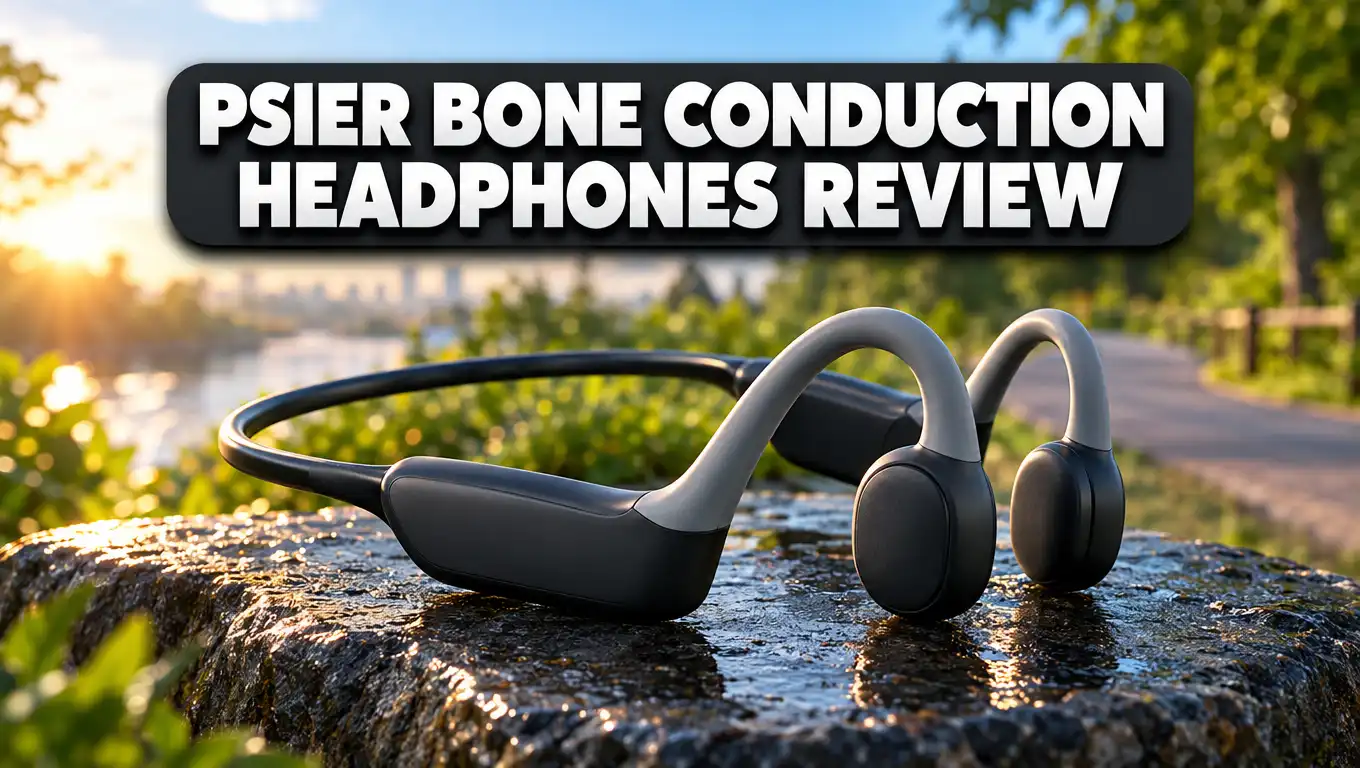
Psier Bone Conduction Headphones Review: Worth Your Money?
Do you love music, but hate earbuds that fall out mid run? Do you want to hear your playlist while you swim laps? Many people have these problems, and most cheap headphones don’t fix them.
The Psier Bone Conduction Headphones say they fix both. They sit outside your ears, survive deep water, and store thousands of songs. They also cost far less than big brand models.
So, are they worth your money? In this review, I break down the design, sound, battery, swim mode, and real buyer feedback. You will also see the best alternatives in case Psier is not the right fit for you. Let’s dive in.
In a Nutshell
Short on time? Here is the quick summary of what you need to know.
- Swim ready waterproofing: The flagship Psier model carries an IPX8 rating. It can stay under water at 2 meters for one hour. That makes it a real swimming headphone, not just a sweat proof one.
- Built in MP3 player: It packs 32GB of memory, which holds around 4,000 songs. You can leave your phone in the locker and still enjoy music in the pool.
- Open ear comfort: The headphones rest on your cheekbones, not inside your ears. You stay aware of traffic, people, and coaches while you train.
- Solid battery life: You get up to 8 hours of playtime on the swim model. A magnetic charger fills the battery in about 2 hours.
- Budget friendly price: The IPX8 model sells for under $50 on Amazon. Big name rivals with swim modes often cost two or three times more.
- Honest weak spot: Like all bone conduction headphones, the bass is light. If you want deep, punchy bass, you may feel let down.
PSIER Bone Conduction Headphones IPX8 Overview

- 【Bluetooth + MP3 Modes】 Underwater headphones with Bluetooth 6.0 ensure ultra-low transmission...
- 【IPX8 Waterproof for Underwater Use】The waterproof bone conduction headphones have a certified IPX...
Last update on 2026-11-27 / Affiliate links / Images from Amazon Product Advertising API
The PSIER Bone Conduction Headphones IPX8 is the brand’s flagship model. It mixes Bluetooth headphones and an MP3 player in one light frame. Psier made it with swimmers, runners, and cyclists in mind.
On Amazon, this model holds a 4.1 out of 5 star rating from more than 2,500 buyers. At the time of writing, it sells for about $47.49, down from a typical price of $49.99.
So what do you get for that price? Here are the core specs:
- Waterproof rating: IPX8, safe at 2 meters deep for one hour
- Storage: 32GB, about 4,000 songs
- Battery: Up to 8 hours of playtime
- Charging: Magnetic cable, full charge in about 2 hours
- Drivers: 14mm speaker drivers
- Extras: Built in mic, multipoint pairing, AI music feature
Psier says you can connect two or more devices and switch between them. You can also double click to jump between Bluetooth mode and MP3 mode.
The box includes an adjustable rope. This small strap tightens the fit for smaller heads. That matters a lot in the pool, where loose headphones slip off fast.
In short, this is a do it all sports headphone. It is not a premium audiophile device. But for the price, the feature list is very strong.
How Bone Conduction Technology Works
Before we judge the sound, let’s look at how these headphones work. Bone conduction is different from normal earbuds. Knowing the basics helps you set the right expectations.
Normal earbuds push sound waves into your ear canal. Those waves hit your eardrum, and your inner ear turns them into sound. Bone conduction skips the eardrum.
Instead, small transducers sit on your cheekbones, just in front of your ears. They send tiny vibrations through your bones. Your inner ear, called the cochlea, picks up those vibrations as sound.
This design brings some clear benefits:
- Your ears stay open. You hear cars, bikes, and people around you.
- Nothing sits inside your ear. This means less pressure, less sweat, and less ear pain.
- It works underwater. Water carries vibrations well, so bone conduction suits swimming.
But there are trade offs too. Bone vibrations struggle with deep, low bass. Also, at high volume, people near you may hear some of your music.
Here is a fun tip. If you wear earplugs with bone conduction headphones, the sound gets much louder and fuller. Many swimmers use this trick in the pool. It blocks water noise and boosts the vibrations you feel.
Now you know why bone conduction is so popular with athletes. Let’s see how Psier builds on this idea.
Design, Build Quality, and Comfort
The first thing you notice is the wraparound design. A thin band goes behind your neck. The two pads rest in front of your ears, and the hooks loop over the top.
Psier uses soft, skin friendly silicone on the contact pads. This feels gentle on your skin, even after a long session. The open design also lets air flow, so your ears don’t get hot and sweaty.
The fit feels secure but not tight. During runs, the headphones stay in place well. The band does not bounce much, even on hard sprints.
For swimming, the adjustable rope is a smart touch. You loop it around the back band to shrink the fit. This stops the headphones from shifting when you push off the wall.
The whole unit has a fully sealed coating. There are no open charging ports for water to sneak into. Instead, a magnetic cable snaps onto contact points.
The buttons sit on the side of the frame. They are easy to find by touch, even with wet fingers. You can control volume, play, pause, and mode switching without looking.
There are a few small downsides:
- The band can touch the collar of a jacket or a hood.
- Some people with glasses may need a few minutes to adjust.
- The frame does not fold, so it takes more bag space.
Overall, the build feels solid for the price. It won’t feel like a premium Shokz, but it holds up well for daily workouts.
Top 3 Alternative for PSIER Bone Conduction Headphones
The Psier is a great value pick. But it may not suit everyone. Here are three strong alternatives worth a look.
1. SHOKZ OpenMove

- Open-Ear Headphones - Experience unmatched comfort with our lightweight, secure fit, featuring an...
- Safety & Connection - Stay motivated with your favorite audio without compromising on safety. Unlike...
Last update on 2026-11-27 / Affiliate links / Images from Amazon Product Advertising API
Shokz is the best known name in bone conduction. The OpenMove is its entry level model. It gives you clear sound, a comfortable fit, and strong brand support.
It does not have MP3 storage and is not built for swimming. But for runners and office users, it is a reliable choice. It costs more than Psier, but many people trust its long term quality.
2. TECKNET Bone Conduction Headphones
No products found.
The TECKNET model is a budget bone conduction option. It uses Bluetooth 6.0, gives you 10 hours of playtime, and has an IPX5 rating. It has thousands of reviews on Amazon.
It sells for around $30. That makes it cheaper than the Psier swim model. But it is sweat and rain proof only, so skip it if you swim.
3. Ortizan Open Ear Headphones

- Open-ear Design Brings All-day Comfort: Ortizan wearable stereo sports headphones have a fully innovative...
- Air Conduction Technology Directional Sound Generation: The air conduction technology of the headphones...
Last update on 2026-11-27 / Affiliate links / Images from Amazon Product Advertising API
The Ortizan uses air conduction, not bone conduction. Small speakers sit near your ear and aim sound into it. This often gives you fuller sound and better bass.
It weighs only 19g and has an IPX6 rating. It holds a 4.2 star rating on Amazon. It is a great pick for runners who want open ear safety with richer audio.
Sound Quality: What to Expect
Let’s be honest about sound. Bone conduction headphones don’t sound like premium earbuds. Psier is no exception. But it does a good job for its class.
The 14mm drivers give clear mids and highs. Vocals in podcasts and audiobooks sound sharp and easy to follow. Pop, rock, and spoken word content all sound pleasant.
The weak spot is bass. Deep beats in hip hop or EDM feel thin. You hear the bass line, but you don’t feel it like you would with earbuds.
Volume is decent. In a quiet room, the sound is plenty loud. On a busy road, you may need to push the volume near the top.
Sound leakage is worth a mention. At high volume, people nearby can hear faint music. In a quiet office or library, this may bother others.
Here is how the Psier sounds in different settings:
- Podcasts and audiobooks: Excellent. Voices are clear and easy to understand.
- Running outdoors: Good. You hear music and your surroundings at once.
- Swimming with earplugs: Surprisingly good. The sound gets fuller and louder.
- Bass heavy music: Average. Expect a light, thin low end.
A Reddit user looking at Psier noted that bone conduction models often lack bass, but said this was not a deal breaker for podcasts. That sums it up well. If you listen to voices and casual music, you will be happy.
Swimming Performance and MP3 Mode
This is where the Psier really shines. Swimming is its main selling point. Most budget bone conduction headphones can’t handle pool use. This one can.
The IPX8 rating means it is safe under water at 2 meters deep for one hour. That covers most pool lanes and shallow open water swims.
Here is one key fact many buyers miss. Bluetooth does not work well underwater. Water blocks the signal almost right away. That is why the MP3 mode matters so much.
With 32GB of storage, you can load about 4,000 songs. Then you leave your phone on the deck and swim freely. Your music plays straight from the headphones.
Switching modes is simple. You double click to switch between Bluetooth and MP3. You can do this before you get in the water.
Loading songs is easy too:
- Connect the magnetic cable to your computer.
- The headphones show up as a USB drive.
- Drag and drop your music files.
- Unplug and start swimming.
For the best pool experience, wear earplugs with the headphones. This blocks splashing noise and makes the music much louder. Many swimmers say this tip changes everything.
One small note: Make sure you dry the charging contacts after each swim. This keeps the magnetic connection clean and stops corrosion over time.
Battery Life and Charging
Battery life is solid for a swim headphone. The IPX8 model gives you up to 8 hours of continuous playtime. That covers a full week of short workouts for many people.
Charging uses a magnetic cable. It snaps onto the contact points with ease. A full charge takes about 2 hours.
Why magnetic charging? It lets Psier seal the whole body. A normal USB port would be a weak spot for water. The magnetic design keeps the headphones fully waterproof.
There is one downside to this design. You need the special cable to charge. If you lose it, you can’t use a standard phone charger. Keep it in a safe place, or buy a spare.
Here is a quick look at real world battery use:
- Daily 45 minute runs: About 10 days between charges
- Daily 1 hour swims in MP3 mode: About a week between charges
- Long commutes plus workouts: About 2 to 3 days
Battery life drops a bit at high volume. It also drops faster in cold weather. These are normal for any wireless headphone.
The X12 model, which we cover below, offers even more. It gives you 10 hours of playtime and up to 200 hours of standby. It also uses a common Type C port.
Connectivity, Calls, and the AI App
The Psier uses modern Bluetooth for a stable link. The brand lists Bluetooth 5.4 on its site, and newer Amazon listings mention Bluetooth 6.0. Either way, you get low latency and fast pairing.
Pairing is quick. You turn on the headphones, open your phone’s Bluetooth menu, and tap the Psier name. Next time, it reconnects on its own.
Psier also supports multipoint connection. You can link two devices, like a phone and a laptop. Then you switch between them without pairing again.
The built in microphone handles calls well in quiet places. Callers hear you clearly indoors. On windy roads, your voice may sound a bit muffled, which is common for sports headphones.
Now for the fun part. Psier adds an AI music feature through the companion app, called the Boean App. You can describe a mood or idea, and the app creates an original song for you.
The app also gives you custom EQ settings. You can pick from these options:
- Bass Boost for more low end
- Balanced vocals for podcasts
- Genre presets for jazz, pop, and more
The Bass Boost preset helps a lot. It does not turn the Psier into a bass monster. But it makes music feel fuller. Try it first if you find the default sound thin.
PSIER X12 Bone Conduction Headphones: The Budget Pick

- [Bone Conduction Earbuds] Psier Bone Conduction Headphones employ a fully enclosed cavity design with the...
- [Your All-Weather Training Partner]
Last update on 2026-11-27 / Affiliate links / Images from Amazon Product Advertising API
Don’t swim? Then the PSIER X12 may suit you better. This is the 2026 upgrade model, built for land sports. It sells for about $39.99 on Amazon.
The X12 weighs just 23g, so it feels almost weightless. It uses a flexible memory titanium frame. The frame bends to fit your head and springs back to shape.
Here are the key X12 specs:
- Playtime: Up to 10 hours
- Standby: Up to 200 hours
- Charging: Type C, full in about 2 hours
- Waterproof: IPX5, sweat and rain proof
- Sensitivity: 90 dB
Psier says the X12 uses a fully enclosed cavity design. This cuts sound leakage by up to 50%. That is great for gyms, offices, and quiet trains.
But there is a catch. The X12 is not safe for underwater use. It also has no MP3 storage in its main listing. So it is a pure Bluetooth headphone for running, cycling, and daily life.
The X12 holds a 3.5 star rating from about 650 buyers. That is lower than the IPX8 model. Reviews show more mixed feedback on sound and fit.
My take? If you can spend a few dollars more, the IPX8 model is the better buy. It does everything the X12 does, plus swimming and offline music.
Pros and Cons
Every product has strengths and weak spots. Here is a clear look at both sides of the Psier IPX8 model.
Pros
- True swim ready design. The IPX8 rating lets you use it underwater for an hour at 2 meters deep.
- Large 32GB storage. You can carry about 4,000 songs and leave your phone behind.
- Open ear safety. You hear cars, bikes, and people while you run or ride.
- Comfortable for long sessions. Soft silicone pads and no ear canal pressure keep you comfy.
- Great value for money. You get swim features for well under the price of big brands.
- Multipoint pairing. You can switch between your phone and laptop with ease.
- Useful EQ app. The Bass Boost preset improves the sound noticeably.
Cons
- Light bass. Deep beats feel thin, which is common for bone conduction.
- Sound leakage at high volume. People nearby may hear your music in quiet spaces.
- Proprietary charging cable. You can’t charge it with a normal USB cable.
- No Bluetooth underwater. You must use MP3 mode for swimming.
- Average call quality in wind. Your voice may sound muffled outdoors.
- Less brand support than Shokz. Long term durability is less proven.
Overall, the pros clearly win for swimmers and active people. The cons matter more if you are a serious music lover.
Who Should Buy the Psier Bone Conduction Headphones?
The Psier is not for everyone. But for certain people, it is a near perfect match. Let’s see if you are one of them.
Swimmers on a budget. This is the top group. You get IPX8 waterproofing and MP3 storage for under $50. Few headphones give you this combo at this price.
Outdoor runners and cyclists. The open ear design keeps you aware of traffic. This is a big safety plus on busy roads.
Podcast and audiobook fans. Voices sound clear and crisp. You can listen for hours without ear fatigue.
People who hate earbuds. Some people get ear pain or infections from in ear buds. The Psier sits outside your ears, so this problem goes away.
Triathletes. You can use one headphone for swimming, cycling, and running. That saves money and bag space.
Now, who should skip it?
- Bass lovers. If you live for deep beats, try air conduction or regular earbuds.
- Commuters on loud trains. Open ear headphones can’t block background noise.
- Office workers in quiet rooms. Sound leakage may bother your coworkers.
- Audiophiles. You want detail and depth that bone conduction can’t provide.
If you fit the first list, the Psier is a smart, low risk buy. If you fit the second, check the alternatives above.
Value for Money: Is It Worth the Price?
Let’s talk money. At around $47 to $50, the Psier IPX8 model sits in the budget range. So how does it compare to the market?
Premium swim headphones from big brands often cost $130 to $180. They offer better sound and brand support. But they cost two to three times more.
For that price gap, the Psier gives you most of the key features:
- IPX8 waterproofing
- Onboard MP3 storage
- Bluetooth with multipoint
- App with EQ presets
What do you lose? Mainly sound refinement and long term brand trust. Premium models have richer audio and longer warranties.
Think about how you will use it. If you swim two or three times a week, the Psier gives you huge value. You get music in the pool without a big investment.
If you are new to bone conduction, the Psier is also a great starter pair. You can test the open ear style without spending a lot. If you love it, you can upgrade later.
Psier also sells through Amazon with a 30 day return window on many listings. That lowers your risk. If the fit or sound does not suit you, you can send it back.
My verdict on value: The Psier gives you more features per dollar than most rivals. For budget swimmers, it is hard to beat.
Final Verdict
So, is the Psier Bone Conduction Headphones worth buying? For most active people, the answer is yes.
The IPX8 model does one thing very well. It brings music to the pool at a fair price. The 32GB storage and sealed design make swimming with music easy and fun.
It also works well on land. Runners and cyclists will love the open ear safety and comfy fit. Podcast fans will enjoy the clear voices.
The weak points are real but expected. Bass is light, and sound leaks at high volume. These issues affect every bone conduction headphone, not just Psier.
Here is my simple advice:
- Buy the IPX8 model if you swim, even once a week.
- Buy the X12 if you only run or cycle and want to save a few dollars.
- Buy Shokz if you want the most trusted brand and can spend more.
- Buy Ortizan if you want open ear safety with fuller bass.
Overall, I rate the Psier IPX8 a solid 4 out of 5 for value and versatility. It is not perfect, but it delivers where it counts.
If you want music in the pool without breaking the bank, give it a try. Your next swim might be your most fun one yet.
Frequently Asked Questions
Can I use Psier bone conduction headphones for swimming?
Yes, you can use the IPX8 model for swimming. It is safe at 2 meters deep for one hour. Use MP3 mode underwater, because Bluetooth does not work well in water.
How many songs can the Psier headphones hold?
The IPX8 model has 32GB of storage. This holds about 4,000 songs. You load music by connecting the headphones to a computer with the magnetic cable.
How long does the battery last?
The IPX8 model lasts up to 8 hours per charge. The X12 model lasts up to 10 hours. Both take about 2 hours to charge fully.
Is the Psier X12 waterproof?
The X12 has an IPX5 rating. It resists sweat and rain. It is not safe for swimming or any underwater use.
Do Psier headphones have good bass?
The bass is light, like most bone conduction headphones. The Bass Boost preset in the Boean App helps a lot. Wearing earplugs also makes the sound fuller.
Can I charge Psier headphones with a normal USB cable?
The IPX8 model needs its magnetic charging cable. A normal cable will not work. The X12 model uses a standard Type C port.
Are Psier headphones better than Shokz?
Psier offers more features for less money, such as MP3 storage and IPX8 waterproofing. Shokz offers better brand support and more refined sound. Your choice depends on budget and use.
Can people around me hear my music?
At high volume, people nearby can hear faint sound. At normal volume, leakage is low. The X12 says it cuts leakage by up to 50% with its sealed cavity design.
Do Psier headphones work with iPhone and Android?
Yes, they work with any Bluetooth device. This includes iPhones, Android phones, tablets, and laptops. Multipoint lets you link two devices at once.
Are bone conduction headphones safe for my ears?
Bone conduction keeps your ear canal open and puts no pressure on your eardrum. But loud volume can still harm your hearing over time. Keep the volume at a moderate level.

Dillip is the founder and editor of dillip.net, a passionate tech enthusiast and AI explorer dedicated to simplifying the world of artificial intelligence and technology for everyday users. With a keen eye for detail, he provides honest reviews, in-depth comparisons, and practical guides to help readers make smarter tech decisions.